

How to Improve Footwork for Faster, Cleaner Dance Moves
Key Takeaways
- Clean footwork is about precision first, speed second. Trying to go fast before the pattern is locked in just reinforces sloppy habits at every tempo
- The most effective drill is slowing a section down until every step is intentional, then gradually bringing the speed back up
- Isolate the feet before adding arms, head, and upper body. The layering method lets your brain learn one thing at a time
- Three physical drills that directly improve footwork: toe taps, single-leg calf raises, and single-leg balance holds
- Recording yourself is the fastest feedback tool available. Timing errors you cannot feel from the inside are visible on camera
- The wrong shoes work against your footwork. A sole built for forward-grip traction adds resistance to every lateral step, pivot, and direction change. A dance-specific shoe removes that resistance so your feet can move the way you are training them to
Clean footwork is not about having fast feet. It is about having precise feet. Speed follows precision. Try to rush it the other way and you get movement that looks sloppy at every tempo.
The good news: footwork dancing is a trainable skill. The people who make it look effortless got there through deliberate practice of a small set of foundational habits. Here is what those habits are.
1. Slow Down Before You Speed Up

This is the most counterintuitive footwork improvement there is, and also the most effective.
When footwork feels sloppy, the instinct is to drill it faster until it clicks. The opposite works better. Slow the section down to the point where every single step is placed with intention. Not where it roughly lands. Where it is supposed to land.
At slow speed, mistakes are visible and correctable. At full speed, they just repeat and reinforce. Lock the pattern in slowly, then bring the tempo up gradually. Clean footwork at 50 percent speed becomes clean footwork at 100 percent.
2. Isolate the Feet First

When you are learning a new combination, your brain is managing footwork, arms, head placement, facial expression, and musicality all at once. That is too much.
Take the arms completely out. Forget the upper body. Run the footwork alone, over and over, until it is so automatic you could have a conversation while doing it. Then layer the arms back in. Then add the head and torso. Then bring in the musicality.
This is called the layering method, and it is how experienced dancers absorb complex combinations without their technique falling apart under pressure. The feet get learned first because they are the foundation everything else sits on.
3. Build the Physical Foundation

Fast, clean footwork dancing requires specific physical capacity that general dance practice does not always develop on its own.
Three drills that directly improve footwork:
Toe taps. Standing in place, tap each foot to the floor alternately as quickly as you can while staying controlled. This builds the reaction speed and muscle recruitment that fast footwork demands.
Single-leg calf raises. Stand on one foot, rise to the ball of the foot, lower with control. The calf and Achilles complex is the engine behind every pointed step, quick direction change, and power transfer in footwork. Strengthening it directly improves the crispness of every step.
Single-leg balance holds. Stand on one foot with your eyes closed for 30 seconds. Swap sides. The micro-adjustments your stabilizer muscles make during this exercise are the same ones that keep your footwork controlled when you are moving fast and the floor contact window is short.
Two to three sessions per week of these three drills produces noticeable improvement in four to six weeks.
4. Practice at 110 Percent

Once a pattern is locked in at full speed, practice it faster than the music requires.
When you train your feet to move at 110 percent of the target speed, the target speed stops feeling fast. It becomes comfortable. This is the same principle athletes use in speed training: push beyond the demand in practice so the demand itself feels manageable in performance.
Apply it in short bursts. Run a footwork pattern as fast as you can while staying clean. Rest. Repeat. Do not train at max speed for long stretches or you build in sloppy habits at the edges of your control.
5. Watch Yourself From a New Angle

Recording your footwork and watching it back is one of the most efficient feedback tools available, and most dancers underuse it.
You cannot feel timing issues from the inside. A step that feels right often looks a half-beat late on camera. A direction change that feels sharp can look hesitant when you watch it. Recording forces an external perspective on movement that only exists as internal sensation when you are in it.
Specifically look for: where each foot lands relative to the beat, whether your weight transfers fully before the next step, and whether your feet are placing exactly where the choreography requires or just approximately there.
6. The Shoe Factor

One thing most footwork guides do not mention: the wrong shoes make footwork significantly harder to execute cleanly.
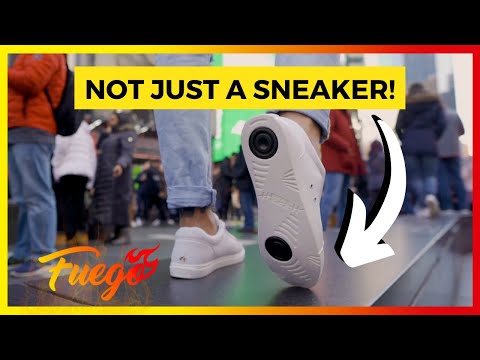
Standard athletic sneakers are built for forward-motion grip. Every lateral step, pivot, and quick direction change fights the outsole rather than working with it. A dance shoe removes that resistance so your feet can focus on where the next step goes.
Fuego's FlowTec™ outsole with dual pivot points is engineered for exactly this. Controlled glide without slipping. Lightweight enough to keep your feet quick through long drilling sessions.
For men: The Derek Hough Low-Top is built for precision and speed at the highest level. The silver high-top adds ankle stability for direction-heavy combinations without sacrificing lightness.


For women: The pastel low-top keeps things expressive and pivot-ready. For dancers who want lift with their footwork, Fuego's wedge collection delivers elevated performance on the same dance-specific platform.


When the shoe works with your movement, the footwork gets cleaner faster.
Explore Fuego's full collection and find the pair built for how you move.
The Real Improvement Curve

Footwork gets better the same way every physical skill gets better: through consistent, deliberate, progressive practice. Slow it down. Isolate the feet. Build the physical capacity. Push past comfort in short bursts. Watch yourself objectively. Wear shoes that support the movement.
Do that consistently and the footwork that currently feels fast starts to feel inevitable.
FAQs
How do you improve dance footwork?
The most effective footwork improvements come from slowing the pattern down until every step is precise, isolating the feet before adding upper body, doing targeted drills like toe taps and single-leg calf raises, and recording yourself to catch timing issues you cannot feel from the inside. Wearing dance-specific shoes with pivot support also removes unnecessary resistance that slows foot speed.
What is footwork in dance?
Footwork in dance refers to the placement, timing, weight transfer, and precision of foot movements during a routine or improvisation. Clean footwork means each step lands exactly where and when it is supposed to, with full weight transfer and crisp contact. It is the foundation all other elements of dance technique build on.
Why does my footwork look sloppy even when it feels right?
Usually because of timing. A step that feels right often lands a half-beat late when viewed from outside. Recording yourself and watching the footage back is the fastest way to identify whether the issue is placement, timing, or weight transfer. Practicing slowly enough that each step is precise before bringing up speed also resolves most sloppiness.
Does footwear affect dance footwork?
Yes significantly. Shoes built for forward-grip traction create resistance during the lateral, pivoting, and quick directional footwork that dance requires. Dance sneakers with smooth non-marking soles and pivot points allow the foot to move the way footwork actually moves, which makes the steps cleaner and faster to execute.