
A Beginner's Guide to Line Dancing Steps
Key Takeaways
- Line dancing is a choreographed group dance where everyone performs the same steps in unison, facing the same direction, without a partner
- You do not need dance experience to start. Most beginner line dances use six to eight foundational steps repeated in sequence
- The most important skill is learning to count the music in 8-count phrases, which is the structure almost every line dance is built on
- The foundational steps every beginner needs are the grapevine, shuffle, step-touch, kick-ball-change, heel dig, and pivot turn
- The Electric Slide, Cupid Shuffle, and Cha Cha Slide are the three easiest line dances to learn first
- Lightweight, non-marking dance sneakers with pivot support make a significant difference for line dancing footwear
Line dancing looks effortless when everyone in the room is moving together. Before you get to that point, there is a moment when you are standing on the edge of the floor wondering how anyone knows what they are doing.
Here is the answer: they learned the same six steps you are about to learn, and then they practiced until the music did the thinking for them.
Line dancing for beginners is more accessible than it looks. The steps are repetitive, they build on each other, and most beginner dances use the same small set of foundational moves in different combinations. Once you know the building blocks, every new dance gets easier.
This is your starting point.
What Is Line Dancing?

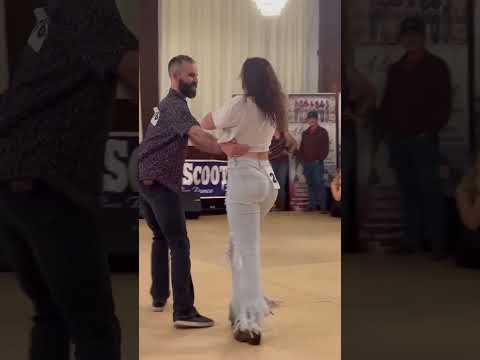
Line dancing involves synchronized movements done in unison to choreographed steps. Dancers line up in rows and perform the same sequence together, all facing the same direction. There is no partner required. You follow the group, the music, and eventually your own muscle memory.
Line dancing originated in country and western culture but has expanded far beyond it. You will find line dances at country bars, wedding receptions, dance fitness classes, and social events across every genre of music.
The good news for beginners is that there is a collection of basic steps that make up all the line dances. Line dances utilize common steps but just order them and combine them in different ways. As you learn more line dances, you become acquainted with more of the common steps that make up all of them.
Step One: Learn to Count the Music

Before you learn any steps, learn to count.
Almost all line dances are built on 8-count phrases. That means the music is divided into groups of eight beats, and the choreography resets at the start of each new group. When you hear someone call out "five, six, seven, eight" before a dance starts, they are counting you into the beginning of a new phrase.
Practice this before you try any steps:
- Put on a song with a clear beat
- Clap along and count from one to eight repeatedly
- Notice where the natural accent falls, usually on beats one and three
- When you can count to eight consistently without losing your place, you are ready to add footwork
Line dancing is not hard when you can count the music. That one skill unlocks everything else.
The 6 Foundational Line Dance Steps
These are the building blocks. Learn these and you can follow almost any beginner line dance.
1. The Grapevine
The grapevine is the most commonly used step in all of line dancing. It adds a little extra swagger to your dance and appears in everything from the Electric Slide to the Cha Cha Slide.
How to do it: Step to the right with your right foot. Cross your left foot behind your right. Step to the right again with your right foot. Tap your left foot next to your right (or add a kick or hitch here). Repeat in the opposite direction to go left.
2. The Shuffle

The shuffle is a high-energy move that gets your feet tapping. Here is the basic forward shuffle: step forward with your right foot, slide your left foot next to your right foot without shifting your weight, then step forward again with your right foot. That is one shuffle.
Shuffles can go forward, backward, and sideways. Once you have the rhythm, it becomes one of the most natural-feeling steps in line dancing.
3. The Step-Touch
The simplest step on this list. Step to the right with your right foot, then bring your left foot next to it and touch the floor without shifting your weight. Step to the left with your left foot, touch with your right. That is it.
The step-touch is often where beginners feel the music for the first time because the rhythm is so direct. Use it to get comfortable with counting and weight transfers before adding more complex steps.
4. The Kick-Ball-Change
This one sounds harder than it is. Kick your right foot forward. Step down on the ball of your right foot (the step). Shift your weight back to your left foot (the change). That is three movements on two beats.
The kick-ball-change appears in dozens of line dances and is also a foundational move in jazz and hip hop. Once you can do it cleanly on both sides, you will recognize it everywhere.
5. The Heel Dig
Stand with your weight on your left foot. Extend your right foot forward and dig the heel into the floor. Bring it back. That is a heel dig.
For faster dances, sometimes a double heel dig is called for, where you quickly dig your right heel into the ground twice, usually to the front and slightly to the side.
6. The Pivot Turn
Stand with your feet together. Step forward on your right foot. Using the ball of your right foot as a pivot point, spin a quarter turn (90 degrees) to the left and bring your weight onto your left foot.
The pivot turn is how line dances change direction to face a new wall. Line dances are designed so that after a full sequence, you have turned to face a new wall. After four complete sequences, you are back to the start position.
3 Beginner Line Dances to Learn First
Once you are comfortable with the foundational steps, these are the three easiest full line dances to start with.
The Electric Slide
The Electric Slide is one of the most common and easiest beginner line dances, making it perfect for newcomers. It uses the grapevine, a step back sequence, and a pivot turn. The same four-wall structure as most line dances, set to a steady 4/4 beat. Almost every line dancing community teaches this one first.
The Cupid Shuffle
The Cupid Shuffle is one of the easiest line dance steps you can learn. It starts with eight counts of side steps to the right, with the last step being a touch. Then repeat the same eight counts to the left. Then eight counts of heel steps in place. Lastly, eight counts of stepping in place to turn a quarter to the left.
Repeat from the beginning facing the new wall. Simple, repetitive, and almost impossible not to enjoy.
The Cha Cha Slide
This one is beginner-friendly for a specific reason: the DJ calls out every move as you do it. "Slide to the left. Slide to the right. Criss cross. Cha cha real smooth." You are following audio instructions in real time, which takes all the pressure off memorizing the sequence. It is the most forgiving starting point of all.
What to Wear for Line Dancing
The right footwear makes line dancing significantly easier and more enjoyable.

Regular athletic sneakers grip the floor too hard for the lateral grapevines and pivot turns that line dancing requires. Every time you pivot, a grippy sole catches and sends torque into your knee instead of letting you rotate cleanly. Over a two-hour social dancing session, that adds up.
Dance sneakers with pivot support and a smooth, non-marking outsole let you move the way line dancing actually requires. Fuego's all-black low-top and white dance sneaker are both built on the FlowTec™ outsole with dual pivot points, specifically for this kind of multidirectional footwork.

Lightweight enough to move freely through a full session, supportive enough to keep your joints protected.
For a full guide on footwear for line dancing versus boots, Fuego's line dancing footwear guide covers the comparison in full.
Tips for Your First Line Dancing Session

Watch before you join. Stand at the edge of the floor for one full song before you try to dance. Watching the sequence once makes the steps click much faster than trying to figure it out while moving.
Start at the back of the room. The back rows have more forgiving sightlines. You can watch the people in front of you and adjust without anyone noticing.
Count out loud if you need to. Nobody will judge you for mouthing the counts. It keeps you connected to the music and prevents you from drifting out of sync.
Expect to get lost. Every beginner loses their place. The right response is to keep your feet moving, find the beat, and re-enter on the next phrase. Stopping completely is the only mistake.
Practice the grapevine and shuffle before you go. If those two steps feel comfortable at home, you will recognize them in every dance on the floor.
Keep Moving, Keep Learning

As you learn more line dances, you will become acquainted with more of the common steps that make up all of them. Over time the steps become second nature and the music starts doing the thinking for you.
That is the moment every beginner is working toward. It comes faster than you expect, and it is worth every stumble along the way.
Explore Fuego's full collection and find the right shoes for every step of your line dancing journey.
FAQs
How do you line dance for beginners?
Start by learning to count music in 8-count phrases. Then learn the six foundational steps: grapevine, shuffle, step-touch, kick-ball-change, heel dig, and pivot turn. Once you know those, start with the Electric Slide, Cupid Shuffle, or Cha Cha Slide as your first full dances.
What are the basic line dance steps?
The core line dance steps every beginner needs are the grapevine (lateral crossing step), shuffle (three steps on two beats), step-touch, kick-ball-change, heel dig, and pivot turn. These six movements make up the majority of beginner and intermediate line dances in various combinations.
Is line dancing easy for beginners?
Yes, especially compared to partner dancing. You follow a set choreography that repeats, there is no partner to coordinate with, and the most beginner-friendly dances like the Cupid Shuffle and Cha Cha Slide are very repetitive. The main skills needed are counting music and learning a small set of foundational steps.
What is the easiest line dance to learn first?
The Cupid Shuffle and the Cha Cha Slide are the easiest starting points. The Cha Cha Slide in particular is ideal for absolute beginners because the DJ calls every move as you dance it, so you do not need to memorize anything in advance.
What shoes are best for line dancing?
Dance sneakers with a non-marking outsole and pivot support are ideal for line dancing. Regular athletic sneakers grip the floor too hard for the lateral grapevines and pivot turns the style requires, which can strain the knee. A dance-specific shoe with pivot points allows smooth rotation and protects your joints through a full session.
How long does it take to learn line dancing?
Most people can learn their first complete beginner line dance in one to two sessions. The foundational steps become comfortable after a few weeks of regular practice. The more dances you learn, the faster you improve, because the same steps appear across different routines.